Open any candy puzzle listing and somewhere in the first three lines there will be a level count. Three thousand. Five thousand. More every quarter. It reads as a statement about how much game you are getting, and it is really a statement about how the game is produced.
Levels are generated, then tuned
Nobody hand-designs five thousand boards from scratch. A studio builds a set of templates — obstacle layouts, goal types, board shapes — and generates variations, then tunes the difficult ones with live data from players. This is not cynical; it is the only way to keep a live game supplied with content every week for a decade. But it means the level count measures production capacity, not variety.
The practical consequence is that levels 1 to 200 are usually the most carefully designed in the whole game, because they were made when the team was small and the stakes were high. What comes after tends to be more of the same at rising difficulty.
The count keeps rising because it has to
A live puzzle game loses players who reach the end. Adding fifty levels a fortnight is cheaper than building a new game and keeps the most engaged players in the economy. So a rising count is a sign that a game is actively maintained, which is genuinely useful information — an abandoned free-to-play title stops receiving levels long before it stops working.
Check the version history on the store listing instead of the headline number. A game updated last month is alive. A game last updated fourteen months ago is not, whatever its level count says.
What the number cannot tell you
- How long the content lasts. Depends entirely on how often the difficulty forces a wait, which is a pacing decision, not a content one.
- How varied the boards are. A game with 800 hand-tuned levels can have more genuine variety than one with 5,000 generated ones.
- Whether you will reach the end. Almost nobody does. The vast majority of players in this genre stop somewhere in the first few hundred stages.
- Whether the game is good. Which is the only question that matters.
Better numbers to look at on the same page
The in-app purchase range, which tells you how the economy is shaped. The update date, which tells you whether anyone is still working on it. The download size, remembering that these games stream far more after installation. And the recent reviews, which are the only part of a store listing not written by the publisher.
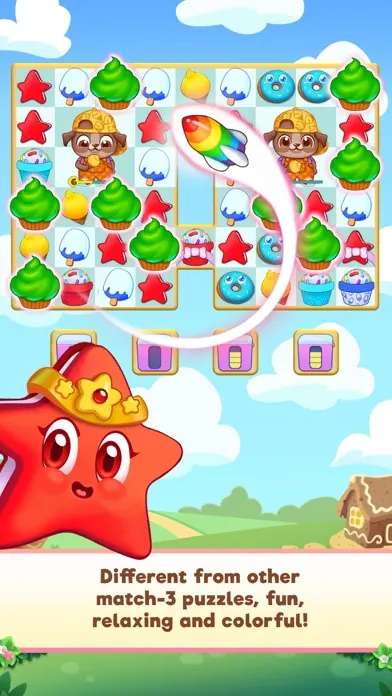
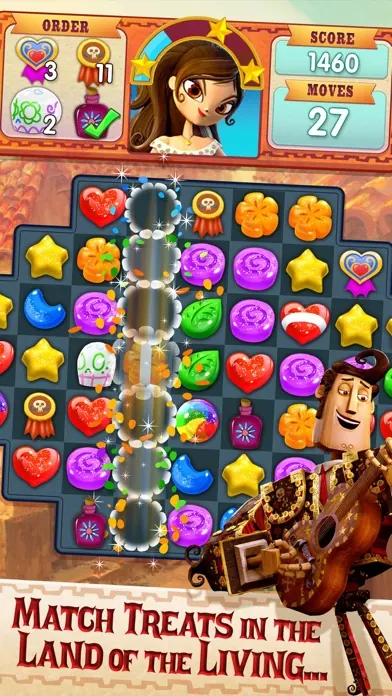
Screenshots from the official Australian store listings. All rights remain with the publishers.
How this site handles level counts
It does not quote them. Not because they are dishonest — publishers generally state them accurately — but because the number changes every fortnight and would be wrong within a month of being written down. Anything on this site that comes from a store listing carries the date it was checked, and level counts are one of the few figures that would need re-checking constantly to stay true.